Taylor Premium Roofing: Reroofing, Roof Repair & Attic Ventilation
Expert residential and commercial roofing services. Free roof and eave inspection across Taylor, Michigan and the Downriver communities.
Roofing-classified maintenance and alteration contractor licensed in Michigan·Free inspection that starts inside the attic, not on the shingles·Insulation depth over the top plate measured and photographed before we quote·Written workmanship warranty on every reroof we install
Taylor Premium Roofing handles reroofing, roof leak repair, storm damage restoration and attic ventilation for homes and businesses across Taylor, Michigan. Architectural asphalt shingles, standing seam steel, self-adhered modified bitumen on the garage planes, fascia, soffit and single-ply membrane on commercial buildings. Free inspection, a written scope, and a workmanship warranty on every reroof.
We start at the eave rather than the ridge. Between 1997 and 2006 the Wayne County Airport Authority, funded in part by the FAA, sound-insulated more than 2,400 houses in Taylor and four neighboring communities. That scope added attic insulation, acoustic windows and doors, new furnaces and central air conditioning. It never touched the roof, and it never re-proportioned the intake air at the eave.
So every quote here begins inside the attic with a tape held over the top plate, measuring how much fill sits above the outside wall and whether any clear air remains under the deck. That measurement sets the ventilation scope, and in a city whose median house is worth $141,200 it very often settles that a repair is the better purchase. We work throughout Taylor and Downriver Wayne County, residential and commercial.
Our Roofing Services in Taylor, MI
Roof Replacement & Reroofing
A reroof in Taylor is a heavier decision than it is two counties north. The Census puts the median owner-occupied house here at $141,200, so a fifteen-square tear-off is close to a tenth of the whole asset rather than a rounding error against it.
Roof Leak Repair
Deep attic insulation changes how a leak announces itself. Fill absorbs, holds and spreads water for days before any of it reaches plaster, so by the time a stain shows on your ceiling the wet area above it is far larger and far older than the stain suggests.
Storm Damage Restoration
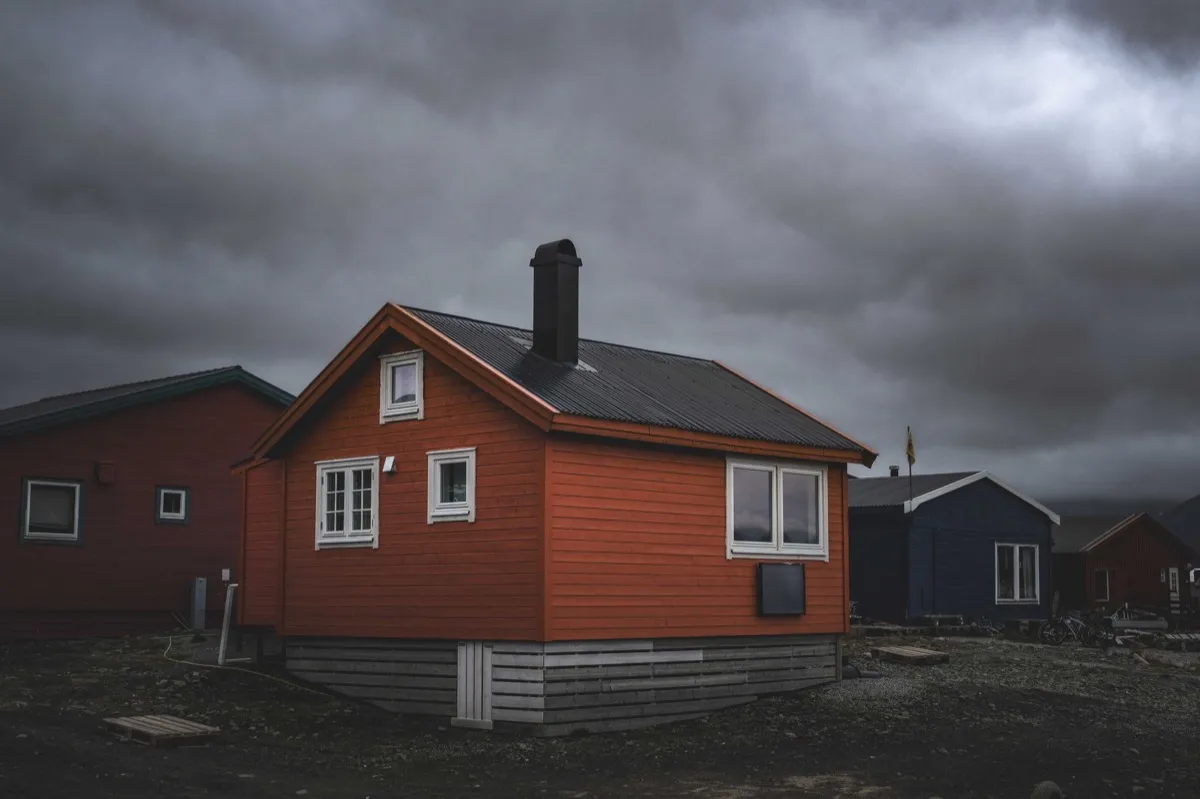
Summer storms reach Taylor as a line of straight-line wind, usually out of the southwest, usually in the evening. On a single-story roof the damage almost always starts at an edge, because that is the only place the wind can get a fingernail under the covering.
Hail Damage Roofing
Most hail calls we take in Taylor turn out not to be hail. Saying that on the phone costs us work and saves the caller a claim they should never have opened, which on a house at this end of the market is not a small favor.
Wind Damage Roofing
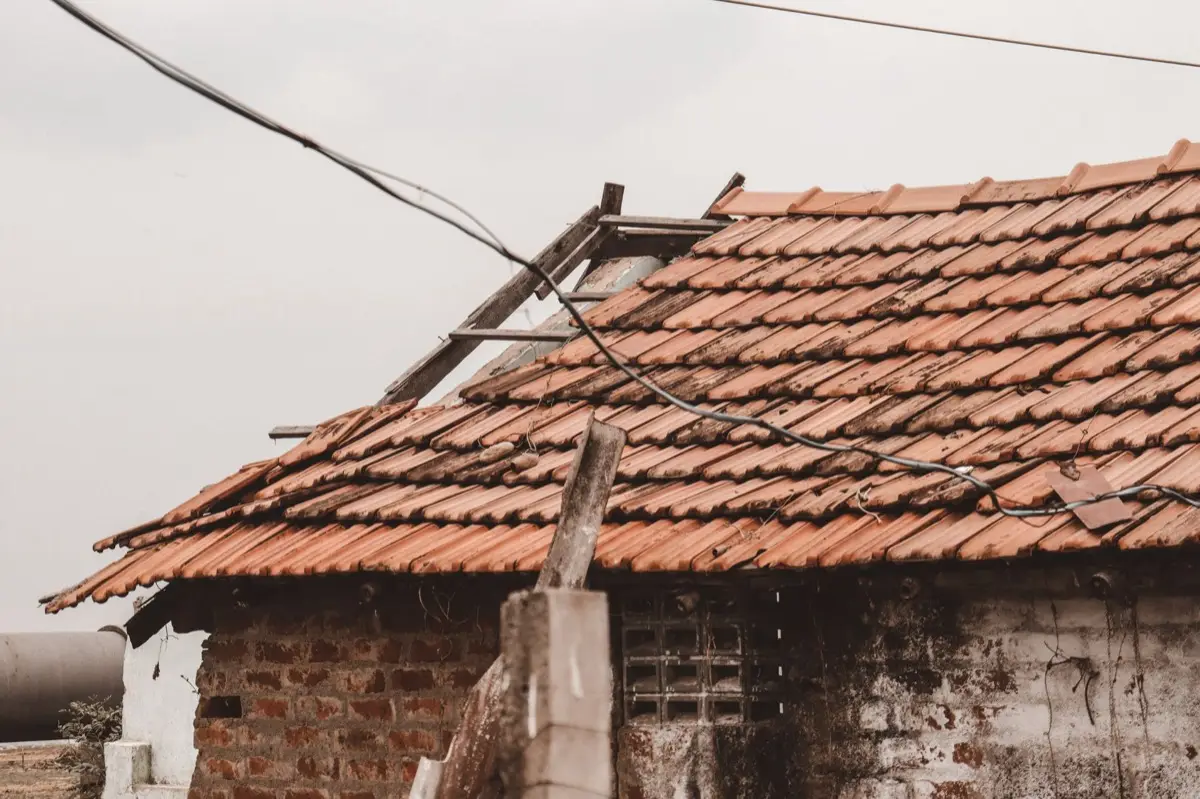
Wind does not lift a roof from the middle. It finds an unsealed edge, gets under one tab and works outward from there, which is why almost every blow-off we repair in this city began at the eave, the rake or a gutter line.
Roof Inspections
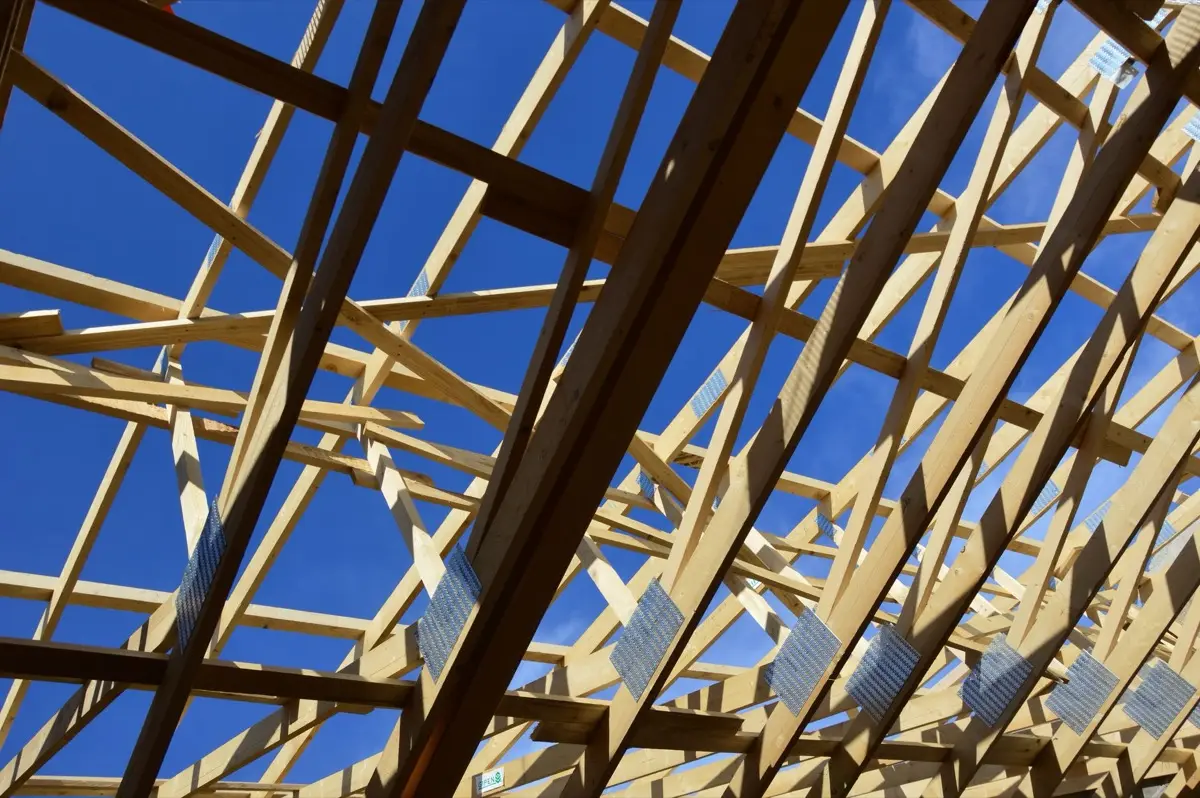
Every inspection we run in Taylor starts with one question the homeowner is rarely asked: was this house in the airport sound insulation program? If it was, the attic you are standing in is not the attic the builder framed, and the roof above it has to be read differently.
Asphalt Shingle Roofs
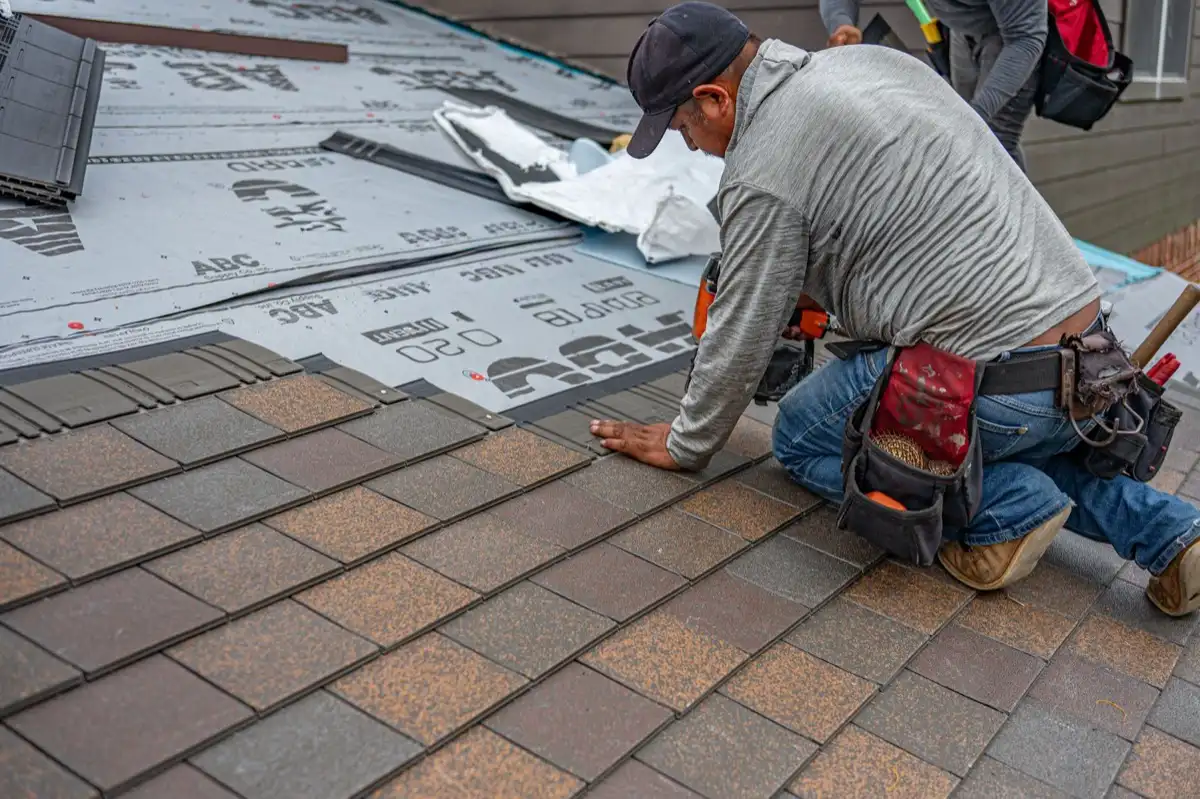
Asphalt is the right covering for effectively every house in this city, and the interesting decisions all sit underneath it. Our estimates spend more lines on the eave assembly and the air path than on which laminate you picked off the sample board.
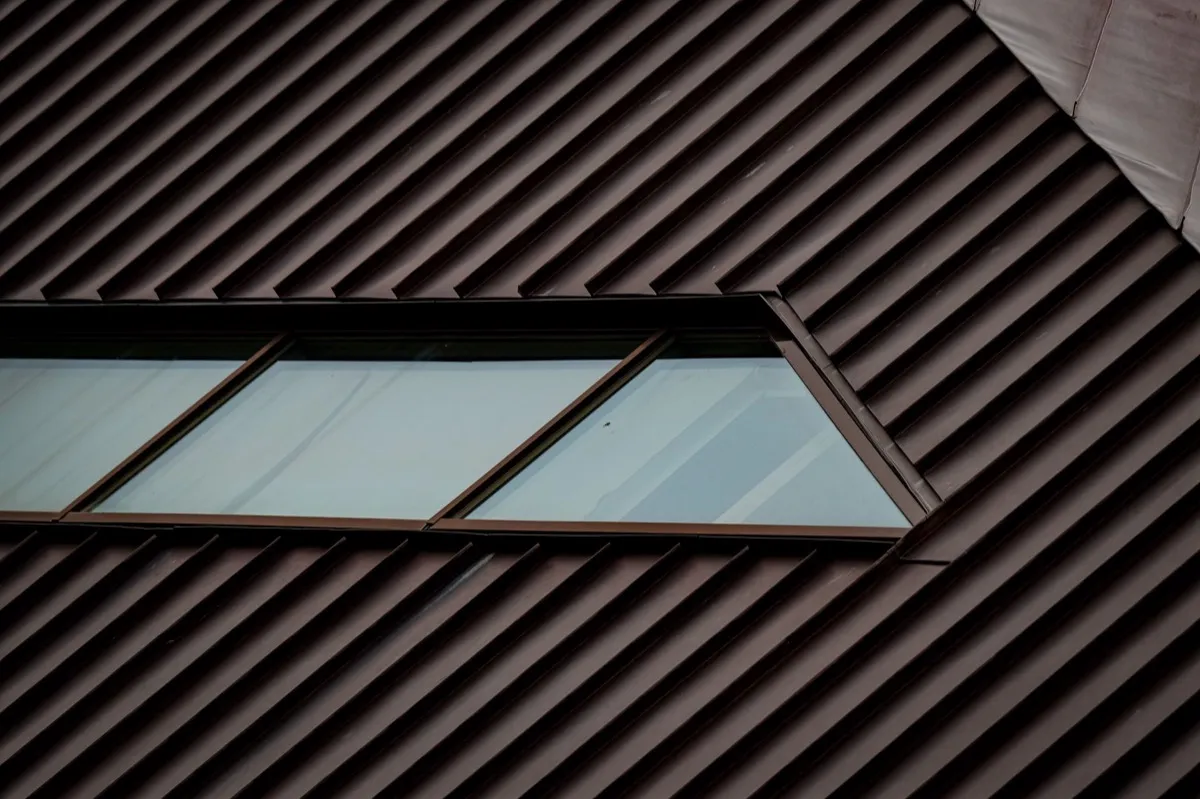
Metal Roofing
We install standing seam and we talk a fair number of Taylor homeowners out of it. Both facts trace back to one thing, and it is what the money does on a house at this end of the market rather than any doubt about the product itself.
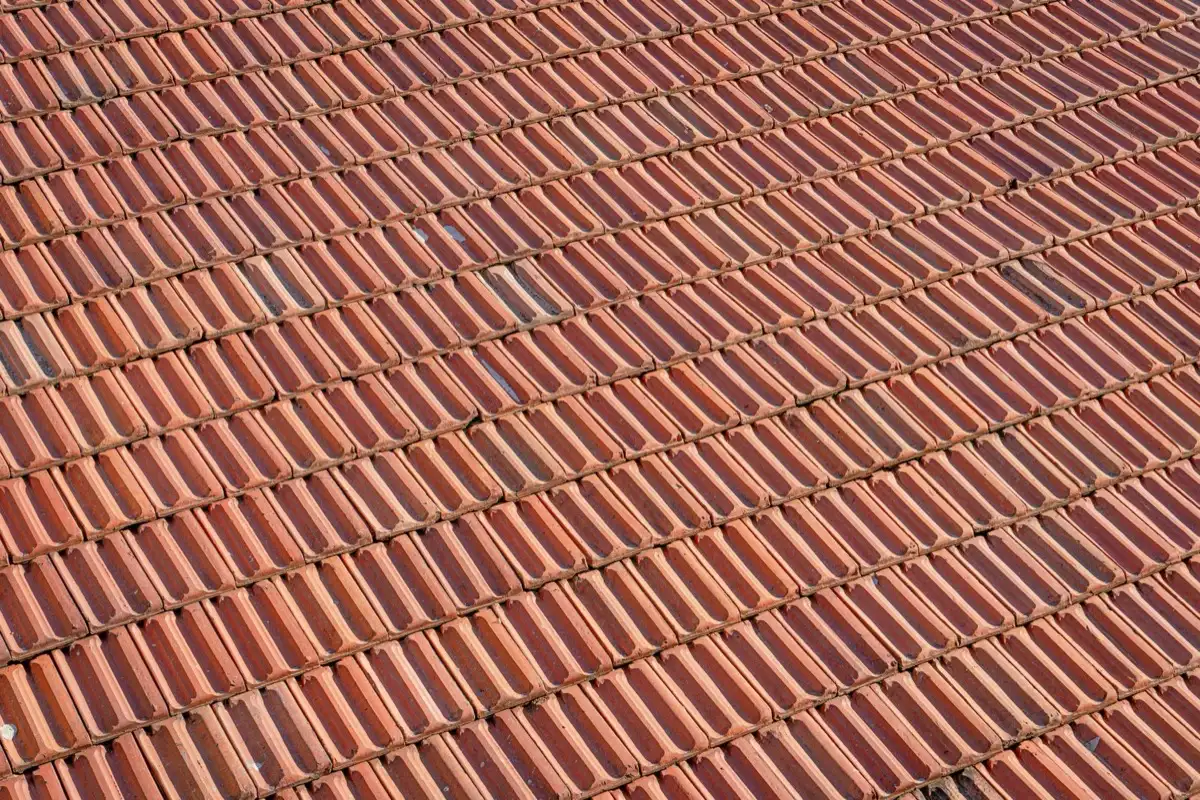
Tile Roofing
There is almost no tile in Taylor, and this page is mostly about why adding some would be a poor use of your money rather than about how we would go about it. We do maintain the little that exists.

Flat & Low-Slope Roofing
Nearly every house in this city has a low-slope plane somewhere: the attached garage, a closed-in breezeway, the family room tacked onto the rear in the middle seventies, the covered stoop. Low-slope work here is residential work, and it comes with a problem the main roof does not have.
Roof Coatings & Sealing
Coatings have one legitimate use on Taylor housing and several that we refuse outright. The refusals are worth more to you than the sales pitch, so they come first.
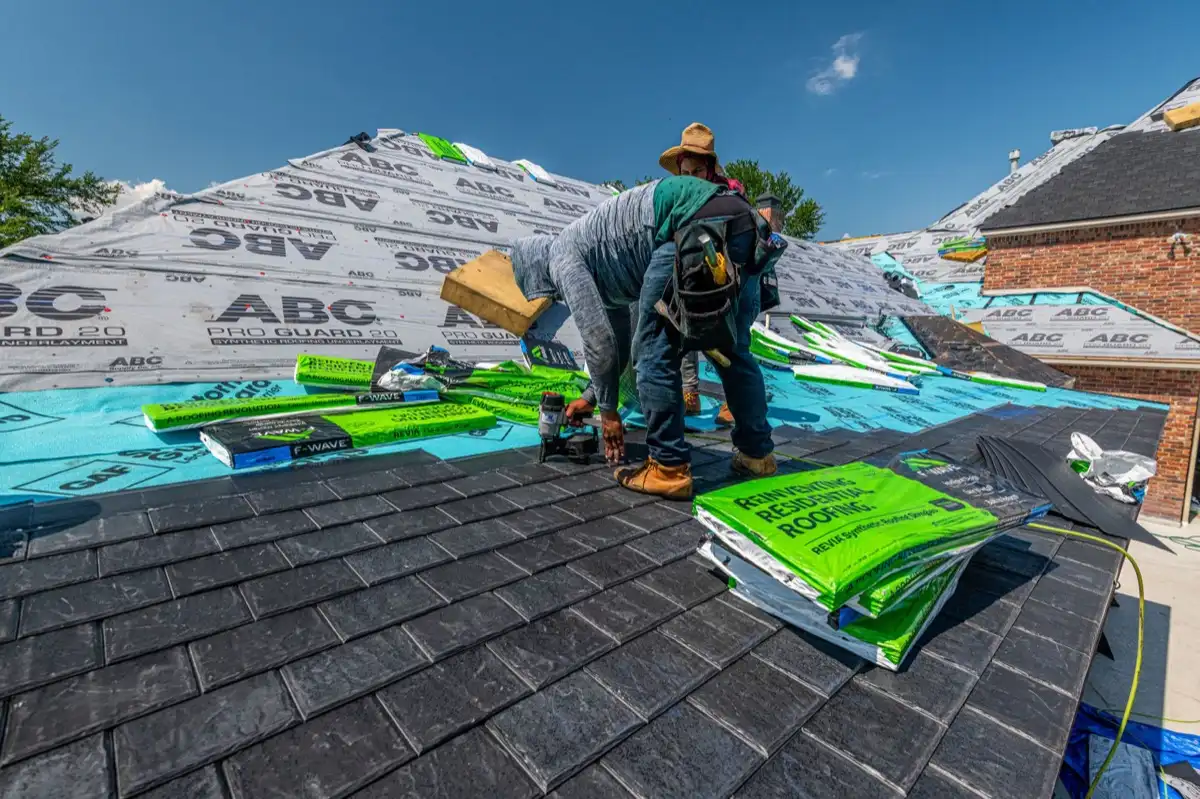
Roof & Attic Ventilation
Everything else on this site reasons back to this page. On a great many Taylor houses the attic was insulated to a modern standard while the roof kept the ventilation it was built with, and the distance between those two facts causes most of the winter damage here.
Skylights
We fit skylights, and on a good number of Taylor houses we will tell you not to. The reason is specific to this city and it is worth hearing before you spend anything on a design.
Fascia & Soffit
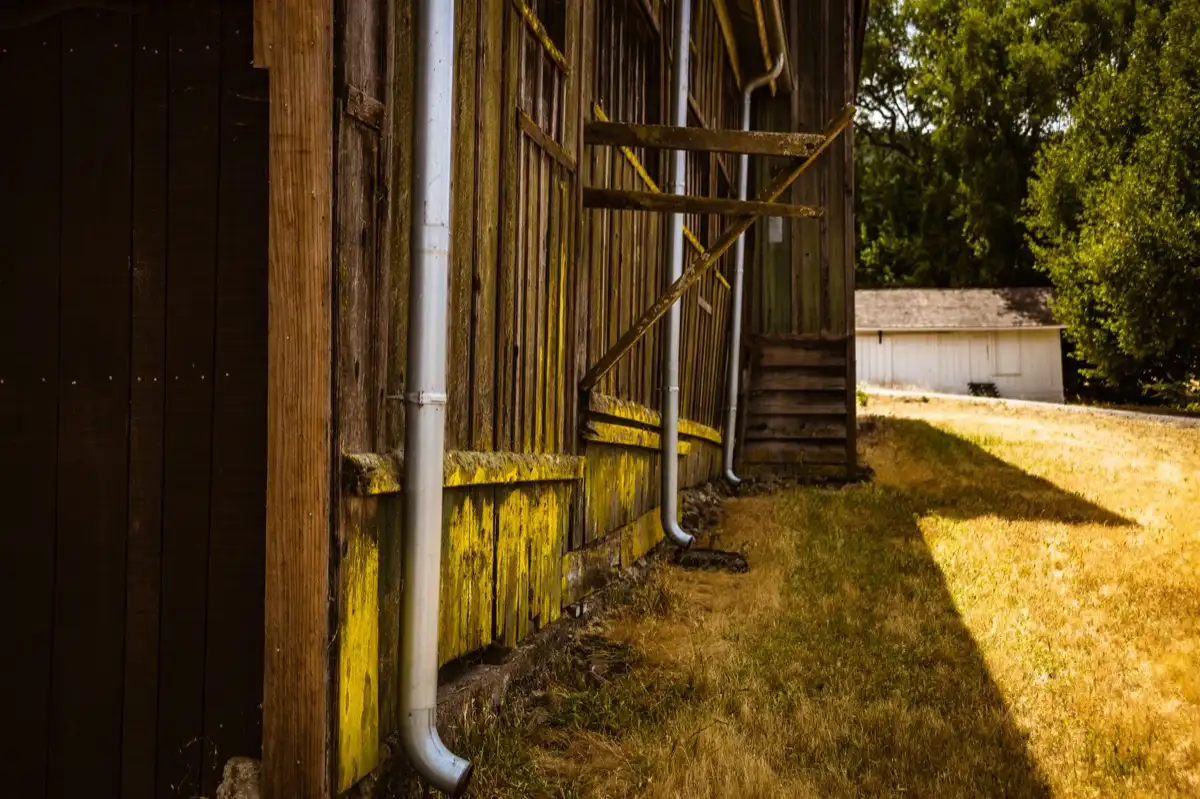
The eave is a small assembly doing four jobs at once, and on this housing it is the single most consequential four feet of the whole roof. It carries the gutter, it terminates the covering, it protects the wall top and it is the only intake the attic has.

Chimney Flashing
Most of the chimneys we are asked about in Taylor should stay, and that is not the answer this trade usually gives. It comes out of something specific about how these particular houses were modernized, and it is worth understanding.

Commercial Roofing
Taylor's commercial roofs are a different animal from its houses and a different animal from most suburban markets, because of what sits immediately south of the city. Freight and logistics buildings serving the airport fill a great deal of the I-94 and Telegraph frontage.
Insurance Claim Help
We document claims and we do not run them. Our part is evidence: dated photographs of every elevation, chalked test squares counted separately by slope, soft metals shot beside the shingle damage, attic readings, and a scope broken into line items with genuine quantities against them.
Why Taylor Chooses Taylor Premium Roofing
- ✓We measure how deep the insulation sits over your top plate before pricing anything, because on this housing that number decides whether a new roof will stay dry.
- ✓Thousands of houses here were sound-insulated under an airport noise program that never touched the roof. We ask whether yours was one, and we scope it differently if it was.
- ✓Intake is restored before any exhaust is added. We will decline to sell a ridge vent over a buried soffit and explain why at more length than you want.
- ✓The air path is a separate priced line beside the covering, with a figure for chutes, a figure for soffit work and a figure for ridge, so you can strike any of them.
- ✓On a city whose median house the Census values at $141,200, we argue for repair far more often than a replacement quote does, and we put the remaining seasons in writing.
- ✓Wet attic insulation is removed and documented rather than buried under a new roof, because sodden fill never recovers its rated value and adjusters rarely pay for it later.
About Taylor Premium Roofing in Taylor, MI
Taylor Premium Roofing works the postwar tract housing that makes up almost all of this city. Around seven in ten homes here date from 1950 to 1979, the Census puts the median build year at 1963, and the typical roof is a single-story gable with short runs, a shallow box eave and very little headroom where rafter meets outside wall. We are licensed in Michigan, insured, and we work residential and commercial.
What shaped our method is what happened to those attics afterwards. Thousands of houses in Taylor were sound-insulated under a federally funded airport noise program that ran until 2006, which deepened the insulation, sealed the envelope and swapped in new mechanical equipment without ever touching the roof above. So we measure fill depth over the top plate, price the air path on its own line, and photograph every chute before the covering hides it.
Some jobs belong to somebody else, and we would rather say that at the door. A covering with seasons left in it gets a written date to look again instead of a replacement quote. We decline coatings over asphalt shingles, exposed-fastener panel on old decking, ridge vents above a buried soffit, and claims on roofs that have simply reached the end. A two-hour repair gets quoted as a two-hour repair.
Service Areas
Taylor Premium Roofing serves Taylor, MI and surrounding communities including:
How It Works
Measure the Fill Over the Top Plate
Every estimate starts in the attic with a tape held vertically over the outside wall. We record how deep the insulation is where it meets the eave, whether any clear channel remains between it and the underside of the deck, and whether chutes were ever fitted. Probe readings are taken down at the ceiling drywall rather than across the top of the fill, where everything reads dry regardless.
Ask Whether the House Was Treated
Thousands of houses in this city had acoustic windows, added attic insulation, sealed penetrations and new mechanical equipment installed under the airport noise program before it closed in 2006. We ask, we look for the tells, and we note it in the file, because a treated attic and an original one need different ventilation scopes and different advice about what to spend.
A Written Scope That Prices the Air Path
The estimate names the covering, the underlayment, the fastening, the flashing metal and the eave work as separate lines with quantities. Chutes, soffit work and ridge each carry their own figure, so you can see what the ventilation costs and strike any part of it. Two quotes written this way can actually be compared against one another.
Install, Then Show You the Channel
Nothing gets stripped that cannot be closed the same evening, and we watch the forecast rather than the schedule. Before the covering goes down, the bare deck and the fitted chutes are photographed bay by bay. That file arrives with the warranty at close-out, so the air path you paid for is something you can look at instead of something you were told about.
Recent Projects Across Downriver Wayne County
Full gallery →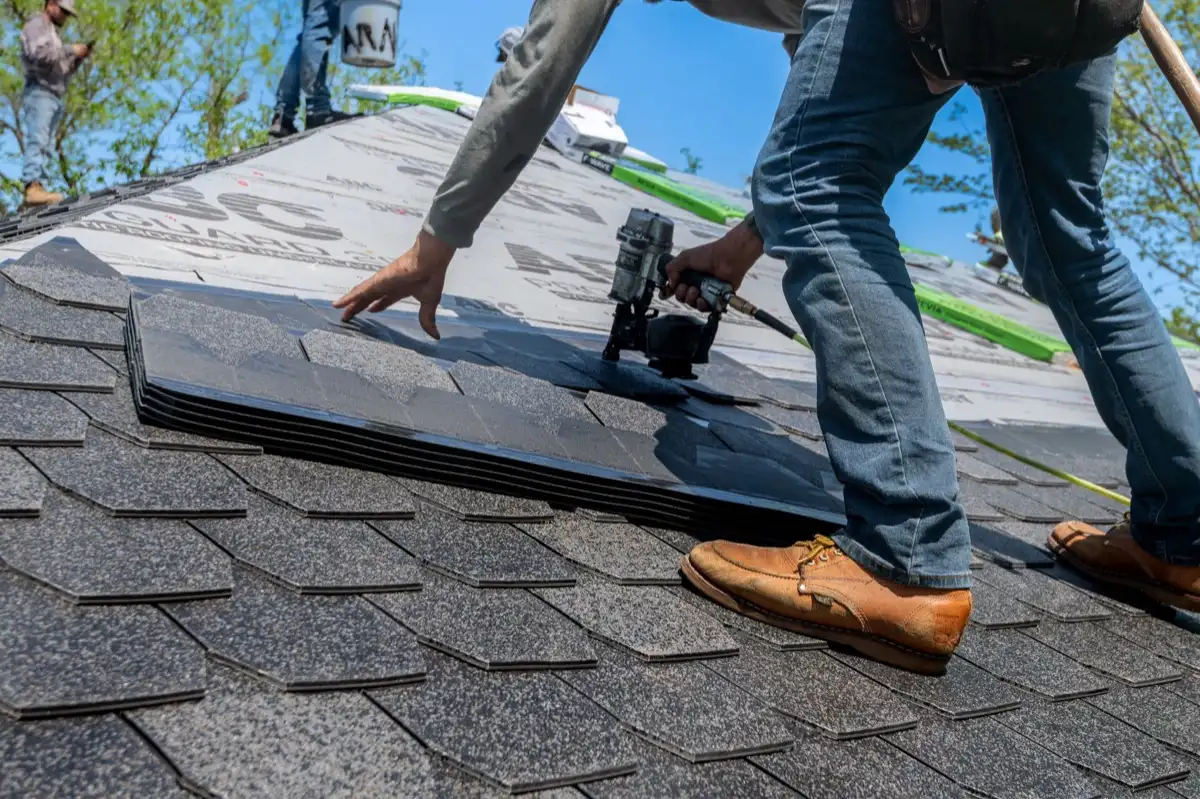
What Taylor Customers Say
Two other companies quoted a full tear-off. This crew went in the attic, showed me photographs of insulation packed right up against the wood at the edge, and said the roof itself had years in it. They fixed the venting for a fraction of the other quotes and the ceiling has been dry all winter.
Our house was in the airport insulation program years ago and nobody had ever connected that to the frost we kept getting in the attic. They knew about it before I mentioned it. Raked the insulation back, put chutes in every single bay and sent the photographs to prove it.
Storm took part of the back slope off. They tarped it properly the same evening, then pulled up the wet insulation and photographed all of it, which the adjuster ended up paying for. I would not have known to ask for that.
Straightforward people. The estimate listed the chutes, the soffit work and the ridge separately so I could see what each part cost, and they talked me out of the expensive shingle line I had asked about. Clean site, permit pulled, no surprises on the invoice.
Commercial Roofing in Taylor and Across the Downriver Communities
Taylor sits on the freight side of the metro. Airport-serving distribution and warehousing occupies much of the I-94 and Telegraph frontage, while a long retail and light-industrial spine runs out along Eureka Road past Southland Center. Those are two different roofing problems.
The distribution buildings are broad, simple fields on steel bar joist and fluted deck, where the scope is decided by drains sized for the original build, re-covers already in place, and thirty years of accumulated rooftop equipment.
The retail and flex stock is the opposite: small fields with a high penetration count, which is a maintenance question long before it is a replacement one.
We core the roof and key every sample to a numbered plan, write specifications legible enough to be compared side by side, rebuild fall with tapered insulation instead of painting over it, and stage the work so the tenant keeps trading.
- ✓Cores pulled, plies counted and moisture measured at numbered positions before any recommendation
- ✓Membrane thickness, insulation build-up, cover board and fastener patterns written into the specification
- ✓Tapered polyisocyanurate, crickets and sumps to create genuine fall instead of painting a ponding field
- ✓Every curb, lineset penetration and walk pad detailed on its own rather than hidden in an allowance
- ✓Field, perimeter and corner fastening split out, with tested edge metal and coping specified
- ✓Staged by section, so each day's opened area is closed again before the crew leaves site
- ✓Maintenance agreements for retail and multi-tenant landlords whose membranes are still sound
- ✓Dated photographs keyed to plan positions, giving next year's survey a baseline to read against
Frequently Asked Questions
Was my Taylor house part of the airport sound insulation program?
It might have been. The Wayne County Airport Authority, with FAA funding, sound-insulated more than 2,400 homes across Taylor, Romulus, Huron Township, Westland and Dearborn Heights between 1997 and 2006, when the program closed. Eligible properties sat inside the airport's noise contours, so it was specific parcels rather than whole neighborhoods.
The tells inside the house are heavy acoustic window sashes, thoroughly caulked penetrations, and attic insulation that is obviously two different products laid at two different times. We look for all three on the inspection and note what we find.
Why does a roofer care how much insulation is in my attic?
Because insulation and ventilation share the same few inches of space at the outside wall. A 1960s roof has very little headroom between the top plate and the underside of the deck, and fill blown to modern depths will reach the sheathing there and close the intake completely.
From outside, a perforated soffit panel looks exactly the same whether the bay behind it is open or packed solid. That is why we measure it rather than judging the eave from the driveway.
Do I need a permit to reroof in Taylor?
Yes. Roofing work is permitted through the City of Taylor Building Department, and pulling it is our job rather than yours. A straight removal and replacement of existing roofing is exempt from zoning review there, which makes the process faster than most homeowners expect. We handle the application, the inspections and the close-out, and the permit number lands in your file alongside the photographs.
There is a stain on my ceiling. Is that definitely a leak?
Not necessarily, and in this city it frequently is not. A tightened, heavily insulated house with its original eave ventilation will condense moisture on the underside of its own deck through the winter and drip during a thaw. It presents exactly like a leak.
Damp that shows up in thaws rather than in rain, rust or frost rings on nail shanks over a wide area, and staining spread across several bays with no penetration above it all point at condensation. A twenty-minute hose test settles it, and we would rather run that test than sell you shingles.
Should I repair or replace?
On this housing, repair more often than the industry average would suggest. The Census puts the median owner-occupied house in Taylor at $141,200 against a median household income of $59,537, which makes a full tear-off a serious share of the asset rather than routine maintenance.
If the field shingle still flexes when lifted, the granule loss is even and the deck under any failure is sound, we will quote the repair and write down how many winters we think you have left.
Will a ridge vent fix my hot attic?
Not on its own, and above a starved attic it actively makes things worse. Exhaust only moves air when intake feeds it, so a ridge vent over buried soffits ends up drawing heated indoor air out through hatch gaps, light fittings and pipe collars instead of pulling outdoor air along the deck.
That is the route to frost on your sheathing in February. We restore intake first, size the ridge to what that intake can feed, and we do not install powered attic fans on this stock at all.